
The H1B Scam
How [They] Engineered a STEM Crisis to Replace America’s Workforce

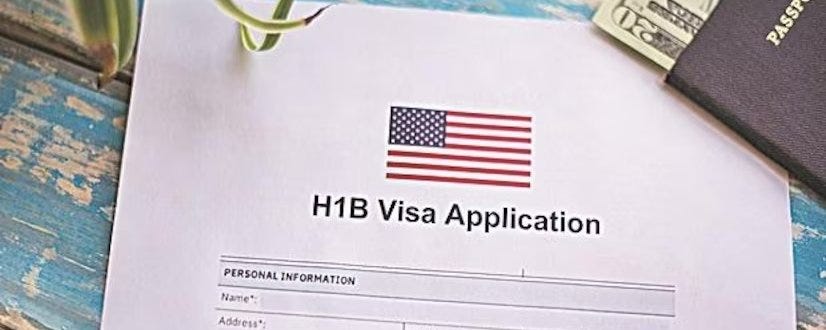
The truth about H1B visas goes much deeper than most people realize. On the surface, these visas are presented as a solution to a supposed shortage of skilled workers in STEM fields. But when you look closely, it becomes clear that this "shortage" isn’t a natural problem, it’s a manufactured one.
For decades, the U.S. education system has been systematically weakened, especially in science, technology, engineering, and mathematics (STEM). The once-robust emphasis on cultivating homegrown talent has been replaced by a focus on standardized testing and superficial metrics. Studies like those from the National Science Board reveal that U.S. students consistently lag behind their international peers in math and science proficiency. Yet this decline coincides with policies that deprioritize STEM education while pushing narratives about a "skills gap." It’s not a coincidence, it’s a strategy.
Setting Up the Problem
Here’s how it works: First, underfund and overburden public education, ensuring fewer U.S. students excel in STEM fields. Then, highlight the resulting workforce gap as a crisis. The solution? Bring in H1B visa workers to "fill the gap." This approach isn’t about solving a problem; it’s about creating one to justify a preordained solution.
Evidence supports this pattern. A 2017 study by the Economic Policy Institute found that there was no genuine shortage of high-tech workers in the U.S. Instead, the H1B program has been exploited by employers to hire foreign workers at wages significantly below the market rate for equivalent U.S. workers. Companies like Tata Consultancy Services and Infosys have been fined millions for manipulating the program, replacing U.S. employees with cheaper, foreign labor under the guise of necessity.
A Sophisticated Version of Open Borders
The H1B visa system mirrors the rhetoric around open borders for low-skilled labor. For decades, policymakers have justified mass immigration by claiming that immigrants will do jobs Americans won’t. The same logic is now being applied to high-skilled labor: "Foreign workers are needed because Americans aren’t qualified." Both narratives serve to justify the displacement of U.S. workers.
In STEM, this displacement isn’t theoretical, it’s visible. In Silicon Valley, for instance, contract houses employ H1B workers under conditions that can only be described as exploitative. These workers often live six to a room in overcrowded apartments, are bused to work like factory laborers, and have their visas tied to their employer, effectively silencing any complaints about mistreatment. A 2019 investigation by The New York Times detailed how many tech companies use staffing firms to shield themselves from accountability while paying H1B workers a fraction of what U.S. employees would earn for the same roles.
Top-Down and Bottom-Up Strategy
This is where the bigger picture comes in. The H1B visa system is part of a dual-pronged strategy that replaces the U.S. workforce from both ends.
Top-Down: Elites push policies that weaken domestic education and labor protections, ensuring dependence on foreign labor. Corporations lobby aggressively for visa expansions while sidestepping efforts to train U.S. workers. Fact: In 2022, companies like Amazon, Google, and Microsoft collectively spent over $200 million lobbying for expanded H1B quotas, according to Open Secrets (dot) org.
Bottom-Up: Exploited foreign workers fill these roles under conditions that suppress wages and prevent unionization. This creates a race-to-the-bottom environment, where U.S. workers are displaced, and labor rights for everyone are eroded.
White Hats Have Seen This for Decades
For those fighting corruption within the system (often referred to as White Hats), this strategy isn’t new. It’s been playing out for decades, weakening the middle class and concentrating power among a global elite. The H1B visa program isn’t just about cheap labor; it’s about control. By creating a workforce that is vulnerable and dependent, corporations and their political allies gain an unshakable grip on the economy.
Donald Trump’s administration attempted to bring these issues into the light, implementing policies to scrutinize H1B abuses. In 2020, for instance, Trump signed an executive order prioritizing American workers for federal contracts, highlighting how the visa system had been used to sideline domestic talent. These efforts were met with fierce resistance from multinational corporations and their political allies, revealing how entrenched the system has become.
The Exploitation in Plain Sight
If you’ve spent time in tech hubs like Silicon Valley, you’ve likely seen the results firsthand. Contract houses dominate the hiring process for major tech firms, employing H1B workers under conditions that most Americans would find unacceptable. These workers are:
Paid 20-30% less than their U.S. counterparts (Source: U.S. Department of Labor reports).
Threatened with visa cancellation if they speak out against mistreatment.
Denied access to permanent residency, keeping them in a perpetual cycle of dependency.
The public rarely hears about this because it’s obscured by a sanitized narrative of globalization and diversity. Meanwhile, the exploitation continues, benefiting the same corporations that claim to champion social justice.
The Public Mandate for Change
Exposing the reality of H1B visas is a critical step in dismantling this system. When the public understands how their jobs and wages are being undermined, not by lack of talent, but by deliberate policies, they demand change. This isn’t about opposing immigration; it’s about protecting workers, both foreign and domestic, from exploitation.
The solution lies in:
Investing in Education: Strengthening STEM programs to build a robust domestic workforce.
Enforcing Labor Laws: Ensuring fair wages and conditions for all workers, regardless of nationality.
Reforming Visa Policies: Limiting H1B visas to truly exceptional cases, not as a replacement strategy for cost-cutting.
The H1B visa issue isn’t just about economics, it’s about sovereignty, fairness, and the future of work in America. The more we shine a light on these practices, the harder it becomes for those in power to exploit the system for their gain.
Check out my work on X: Observing Consciousness
Very well reasoned. Our educational system has been corrupted for a long time and will likely take a long time to recover, especially in the ‘hard’ sciences. It is going to be a challenge to overcome. We also still have to deal with all the collateral damage caused by the after effects of vaccine mandates in critical industries and engineering schools.
Destruction of America one step at a time. So sad.. dumping down of America is here. Sickening.